Assisted Stretching For Stroke Recovery Glasgow
Gentle, one-to-one assisted stretching to support comfortable movement and flexibility as part of life after stroke.
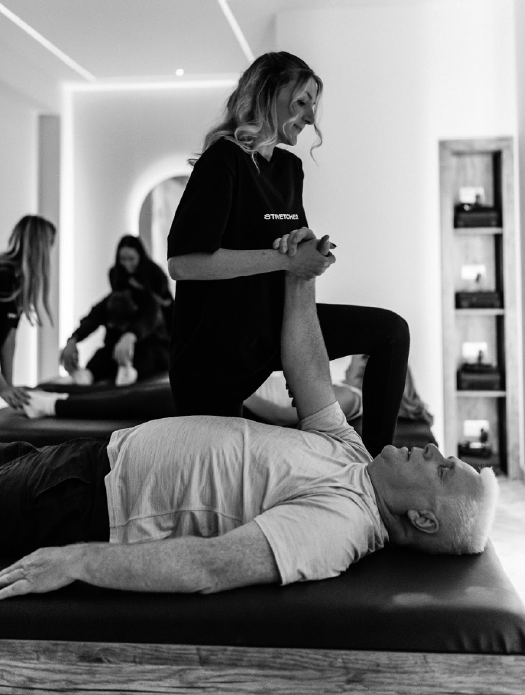
Gentle, one-to-one assisted stretching to support comfortable movement and flexibility as part of life after stroke.
A stroke can affect movement in many different ways. Some people experience weakness on one side, changes in muscle tone, stiffness, altered balance or difficulty moving an arm or leg through the same range as before. Rehabilitation after stroke should always be guided by the appropriate healthcare professionals. Once someone has been medically cleared for the activity, assisted stretching may provide additional one-to-one support for general flexibility and comfortable movement alongside that rehabilitation.
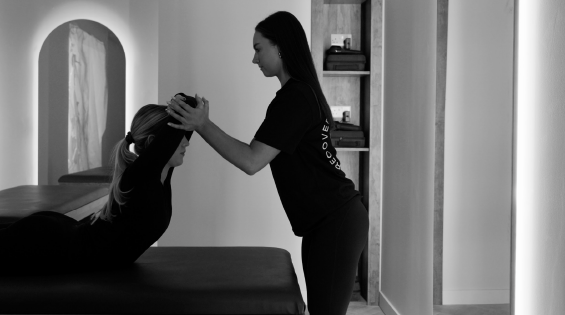
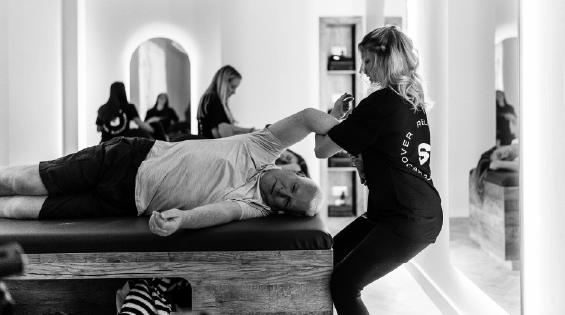
Assisted stretching is a guided form of movement where a trained stretch therapist supports your body and gently moves you through controlled ranges. You do not need to create or hold every position independently, allowing the session to be adapted around your available mobility.
The therapist controls the pace, position and range throughout. For neurological conditions, the aim is not to treat the condition itself, but to provide supportive mobility work that can complement appropriate exercise, physiotherapy and medical care.
A stroke can affect the parts of the brain involved in movement and coordination. Depending on the area affected, a person may experience weakness, changes in balance, altered sensation, reduced control or increased muscle tightness.
Recovery is highly individual. Some people regain a great deal of movement, while others live with longer-term changes. The appropriate exercises and stretches therefore depend on the person’s abilities, stage of recovery and advice from their rehabilitation team.
Gentle movement may form part of post-stroke rehabilitation, but it needs to be approached carefully. Assisted stretching should focus on comfortable range and supported positioning rather than trying to force an affected limb.

A therapist can help position and move a limb when independent stretching is difficult.
Controlled stretching can provide time to work carefully on muscles that feel tight or restricted.
Movements can be modified around balance, weakness and the range available on each side of the body.
Sessions can consider both the affected and unaffected sides to support comfortable overall movement.
The therapist can move slowly and respond immediately to changes in comfort, tone or fatigue.
Stretching can sit alongside an established rehabilitation programme when the clinical team is happy for it to do so.
After a stroke, some people find that an arm or leg becomes harder to move through its previous range. A supported session can give the individual additional opportunities to experience gentle movement without expecting them to manage every position alone.
Muscle tightness or increased tone can require particular care. More force is not better, and aggressive stretching may be inappropriate. The priority is always comfortable positioning, slow movement and respect for the range available.
The unaffected side may also become tight because it takes on more work during walking, transfers and everyday tasks. A whole-body session can therefore consider both sides rather than concentrating only on the area affected by the stroke.
Assisted stretching may also provide a calm environment in which to practise supported movement. It is not neurological rehabilitation, but it can sometimes complement the mobility work already prescribed by a physiotherapist or stroke team.
We have worked with people following stroke who have told us that supported stretching has felt helpful alongside their wider recovery routine. Experiences vary considerably, so this should never be taken as a promise of recovery or improvement.
Before any session, we would want to understand the person’s stage of recovery, current mobility, balance and any guidance from their physiotherapist, consultant or stroke rehabilitation team.
Movements can be selected according to what the individual can comfortably manage. The therapist may work gently through the hips, legs, chest, shoulders or arms while providing additional support to an affected side.
The pace remains slow and the range conservative. If there is pain, increased muscle tone, dizziness, unusual fatigue or any concern about the movement, the stretch should stop.
The aim is to provide supportive flexibility work, not to challenge neurological limitations or replace clinically led rehabilitation.
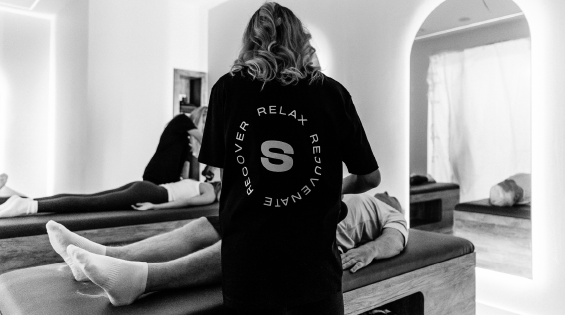
Assisted stretching may be appropriate for some stroke survivors who are medically stable and have been advised that gentle mobility work outside their formal rehabilitation is suitable.
It may be useful for people who need help positioning a limb for stretching or who want additional supported mobility work alongside an existing programme.
Anyone in the early stages after a stroke, experiencing new or changing neurological symptoms, significant pain, uncontrolled blood pressure, falls concerns or other medical complications should speak with their stroke team before considering a session.
Book a consultation at Stretched Glasgow to discuss whether assisted stretching is appropriate alongside your existing post-stroke rehabilitation plan.
Post-stroke stretching needs to be conservative and individual. A limb should never be forced, particularly where there is weakness, altered sensation, increased muscle tone or limited joint control.
Your therapist can use extra support, smaller ranges and slower positioning. If a movement causes pain, dizziness, increased tone or any other concerning symptom, it should stop immediately.
We would always want to know about the stroke, current rehabilitation, mobility aids, falls risk, medication considerations and advice from the person’s clinical team. Assisted stretching is not a replacement for physiotherapy or specialist stroke rehabilitation.
Stroke rehabilitation often involves repeated, appropriate movement over time. Any assisted stretching should fit around the programme already recommended by the person’s physiotherapist or rehabilitation team.
A regular stretching session may provide another opportunity to work on general flexibility, but more is not automatically better. Frequency and intensity should reflect the individual’s tolerance and wider rehabilitation plan.
The goal is to support comfortable movement and make stretching easier to access, while leaving rehabilitation goals and clinical decisions with the healthcare professionals responsible for the person’s recovery.
Life after stroke can involve significant changes in movement, and no two recoveries look the same. Assisted stretching can offer one-to-one support for flexibility when it is appropriate for the individual.
At Stretched Glasgow, we would only position this as complementary mobility work. We do not claim to treat the effects of stroke, and we encourage clients to keep their physiotherapist or stroke team involved in decisions about activity and rehabilitation.
Gentle movement to reduce stiffness and improve comfort.
• Eases joint pain through safe, guided stretches
• Improves flexibility and mobility
• Supports confidence in everyday movement
Restore comfort and strength through guided stretching.
• Relieves muscle tension and pressure on the spine
• Promotes better posture and flexibility
• Encourages natural, pain-free movement
Gradual, guided movement to restore shoulder mobility.
• Reduces pain and stiffness
• Improves range of motion safely
• Helps prevent the shoulder from tightening again
Release tension and restore flexibility in the legs.
• Loosens tight muscles safely
• Reduces strain on the hips and lower back
• Improves balance and movement
Gentle support to reduce hip pain and stiffness.
• Increases hip mobility and comfort
• Reduces pressure on the lower back
• Restores balance and strength in movement
Restore freedom of movement and joint comfort.
• Reduces stiffness and swelling
• Eases muscle tension around the joints
• Helps maintain flexibility and independence
Gentle stretches to support healthy, flexible knees.
• Reduces pressure and stiffness
• Strengthens supporting muscles
• Improves movement and stability
Relief from heel and foot pain through gentle stretching.
• Reduces tension in the calves and feet
• Supports recovery and flexibility
• Promotes pain-free walking and movement
Improve alignment and reduce pain with better posture.
• Loosens tight chest and shoulder muscles
• Strengthens the back for natural alignment
• Reduces strain from long hours of sitting
Ease nerve pressure and relieve lower back discomfort.
• Reduces tightness around the spine and hips
• Promotes smooth, pain-free movement
• Helps prevent future flare-ups
Restore shoulder comfort and movement safely.
• Relieves muscle tension and joint stiffness
• Improves flexibility and posture
• Helps restore confidence in movement
Support faster recovery and better performance.
• Reduces soreness after training
• Improves flexibility and balance
• Helps prevent injury and fatigue
STRETCHED GLASGOW
140-142 Woodlands Road
Glasgow
G3 6LF
Phone: 0141 378 9472
Email: Send a message
Location: Google Maps
Mon – Fri 10am to 8pm
Sat & Sun 10am to 6pm
STRETCHED EDINBURGH
107 Hanover Street
Edinburgh
EH2 1DJ
Phone: 0131 563 4430
Email: Send a message
Location: Google Maps
Monday – 10am to 8pm
Wednesday – Friday 10am to 8pm
Saturday 10am to 6pm
Sunday 10am to 5pm
(Closed On Tuesday)
STRETCHED MANCHESTER
81 Fountain Street
Manchester
M2 2EE
Phone: 0161 376 8198
Email: Send a message
Location: Google Maps
Monday – 10am to 8pm
Wednesday – Friday 10am to 8pm
Saturday 10am to 6pm
Sunday 10am to 5pm
(Closed On Tuesday)