Assisted Stretching for Multiple Sclerosis Glasgow
Gentle, one-to-one assisted stretching to support flexibility and comfortable movement for people living with multiple sclerosis.
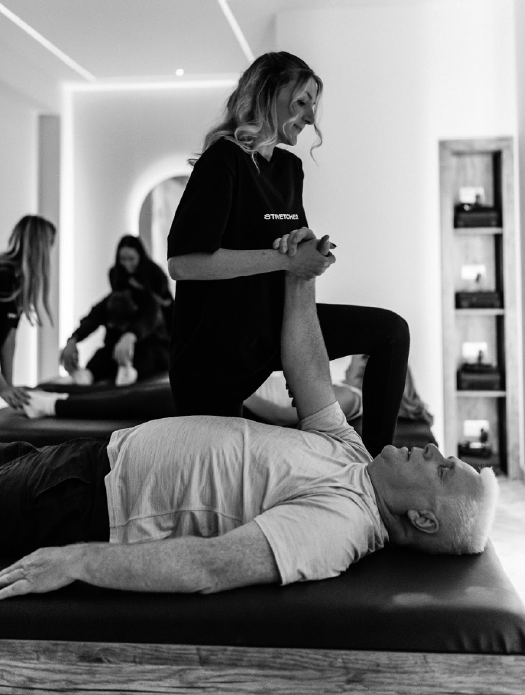

Gentle, one-to-one assisted stretching to support flexibility and comfortable movement for people living with multiple sclerosis.
Multiple sclerosis can affect movement, energy and muscle control in very different ways. Some people experience stiffness or spasms, while others notice fatigue, weakness, balance changes or periods when mobility varies from day to day. Staying active in a way that suits the individual is generally encouraged for people with MS, and stretching can be one part of that wider approach. At our Glasgow studio, assisted stretching is offered as supportive mobility work rather than a treatment for MS itself.
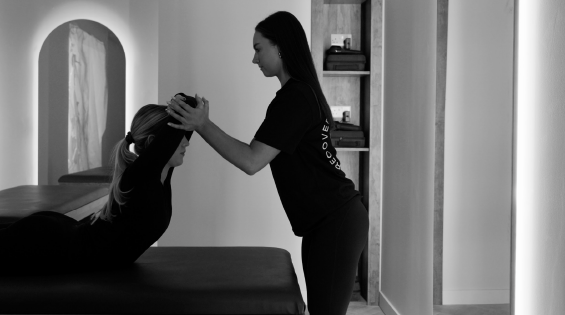
Assisted stretching is a guided form of movement where a trained stretch therapist supports your body and gently moves you through controlled ranges. You do not need to create or hold every position independently, allowing the session to be adapted around your available mobility.
The therapist controls the pace, position and range throughout. For neurological conditions, the aim is not to treat the condition itself, but to provide supportive mobility work that can complement appropriate exercise, physiotherapy and medical care.
Multiple sclerosis is a neurological condition that can affect the brain and spinal cord. Its effects vary considerably, and mobility can be influenced by symptoms such as muscle stiffness, spasms, weakness, fatigue, altered sensation or balance problems.
For some people, tight muscles can make movement feel less fluid. For others, fatigue may be the bigger limitation, meaning that the amount and intensity of activity needs to be carefully paced.
There is no single exercise or stretching routine that suits everyone with MS. A personalised approach is important, with movements adapted to current mobility, comfort and energy levels.

Gentle stretching can help keep muscles moving through comfortable ranges without forcing them.
The pace and range can be changed depending on energy levels, stiffness and how you feel that day.
Your therapist supports the body so you do not have to hold every stretch independently.
Sessions can work through the upper and lower body according to the areas that feel most restricted.
Supported stretching can make mobility work feel more manageable when fatigue is a limiting factor.
Each stretch can be modified around your mobility, symptoms and guidance from your clinical team.
Stretching can be useful for maintaining muscle flexibility, particularly when stiffness or reduced activity makes certain areas feel tighter. Assisted stretching provides a supported way to work on those areas without expecting you to generate all of the movement yourself.
For someone who experiences fatigue, this can be particularly relevant. The therapist can do much of the positioning while you focus on staying relaxed, and the session can be shortened, slowed down or modified if energy levels drop.
Some people with MS experience muscle spasms or increased muscle tone. Stretching should never be used to force a muscle out of a spasm, but gentle positioning and range-of-motion work may form part of a wider mobility approach when appropriate for that individual.
Sessions can include the hips, hamstrings, calves, chest, shoulders and upper back depending on where restriction is felt. The purpose is not to correct MS-related symptoms, but to support general flexibility and comfortable movement.
We have worked with clients living with MS who have told us that supported stretching has been a useful addition to their routine. That is individual feedback rather than evidence that assisted stretching will produce the same result for everyone.
Before starting, your therapist will ask about your current mobility, fatigue, areas of stiffness and any advice you are following from an MS nurse, neurologist, physiotherapist or other healthcare professional.
The session can be adjusted to work around the areas that need attention while limiting unnecessary exertion. If standing balance is an issue, the session can focus on supported positions.
Each stretch is slow and controlled. The therapist can reduce the range or stop if you experience pain, increased spasms, dizziness, overheating or a noticeable increase in fatigue.
The aim is to make mobility work feel manageable and individual rather than turning the session into a test of how far you can stretch.
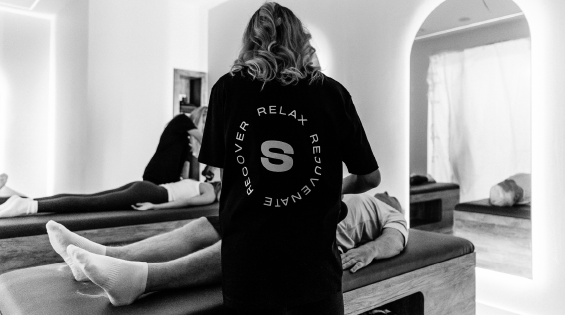
Assisted stretching may be suitable for some people with MS who want additional support with flexibility and general mobility.
It may appeal to people who find self-stretching tiring, awkward or difficult to position correctly, as well as those who simply prefer a one-to-one guided session.
Because MS symptoms vary so widely, it is important to follow your clinical team’s advice. If you are experiencing a relapse, a significant change in symptoms, new neurological symptoms or severe fatigue, speak with your healthcare team before starting or returning to stretching.
Book a consultation at Stretched Glasgow to discuss whether assisted stretching could fit alongside your existing MS exercise, physiotherapy or mobility routine.
Stretching should always be gentle and responsive to how you feel. Sharp pain, worsening symptoms, dizziness, excessive fatigue or overheating are signs to stop and reassess.
Some people with MS are sensitive to heat, so the intensity, duration and environment of a session may need to be adjusted. Regular breaks can also be built in whenever needed.
Tell your therapist about mobility aids, spasms, altered sensation, recent relapses, falls risk, medication considerations and any advice from your MS or physiotherapy team. Assisted stretching is complementary and does not replace medical or neurological care.
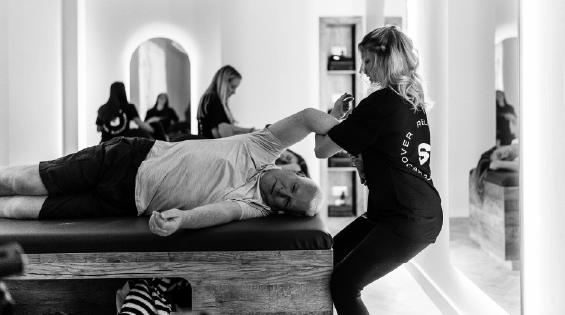
Regular activity can be valuable for people with MS, but the right amount is highly individual. Stretching can form one part of a broader routine alongside suitable aerobic, strength, balance or physiotherapy exercises.
Pacing is important. A shorter, manageable session may be more useful than doing too much and creating unnecessary fatigue. What feels appropriate can also vary from one week to the next.
Consistent mobility work gives you regular opportunities to move through comfortable ranges and notice which areas tend to become tight, without placing pressure on yourself to achieve a particular level of flexibility.
Living with MS often means adapting activity around changing symptoms and energy. Assisted stretching gives you a supported way to work on flexibility without having to manage every position independently.
At Stretched Glasgow, sessions are adapted around the person in front of us. We do not claim to treat MS, but we can provide gentle mobility support that may sit comfortably alongside your wider exercise, physiotherapy and healthcare plan.
Gentle movement to reduce stiffness and improve comfort.
• Eases joint pain through safe, guided stretches
• Improves flexibility and mobility
• Supports confidence in everyday movement
Restore comfort and strength through guided stretching.
• Relieves muscle tension and pressure on the spine
• Promotes better posture and flexibility
• Encourages natural, pain-free movement
Gradual, guided movement to restore shoulder mobility.
• Reduces pain and stiffness
• Improves range of motion safely
• Helps prevent the shoulder from tightening again
Release tension and restore flexibility in the legs.
• Loosens tight muscles safely
• Reduces strain on the hips and lower back
• Improves balance and movement
Gentle support to reduce hip pain and stiffness.
• Increases hip mobility and comfort
• Reduces pressure on the lower back
• Restores balance and strength in movement
Restore freedom of movement and joint comfort.
• Reduces stiffness and swelling
• Eases muscle tension around the joints
• Helps maintain flexibility and independence
Gentle stretches to support healthy, flexible knees.
• Reduces pressure and stiffness
• Strengthens supporting muscles
• Improves movement and stability
Relief from heel and foot pain through gentle stretching.
• Reduces tension in the calves and feet
• Supports recovery and flexibility
• Promotes pain-free walking and movement
Improve alignment and reduce pain with better posture.
• Loosens tight chest and shoulder muscles
• Strengthens the back for natural alignment
• Reduces strain from long hours of sitting
Ease nerve pressure and relieve lower back discomfort.
• Reduces tightness around the spine and hips
• Promotes smooth, pain-free movement
• Helps prevent future flare-ups
Restore shoulder comfort and movement safely.
• Relieves muscle tension and joint stiffness
• Improves flexibility and posture
• Helps restore confidence in movement
Support faster recovery and better performance.
• Reduces soreness after training
• Improves flexibility and balance
• Helps prevent injury and fatigue
STRETCHED GLASGOW
140-142 Woodlands Road
Glasgow
G3 6LF
Phone: 0141 378 9472
Email: Send a message
Location: Google Maps
Mon – Fri 10am to 8pm
Sat & Sun 10am to 6pm
STRETCHED EDINBURGH
107 Hanover Street
Edinburgh
EH2 1DJ
Phone: 0131 563 4430
Email: Send a message
Location: Google Maps
Monday – 10am to 8pm
Wednesday – Friday 10am to 8pm
Saturday 10am to 6pm
Sunday 10am to 5pm
(Closed On Tuesday)
STRETCHED MANCHESTER
81 Fountain Street
Manchester
M2 2EE
Phone: 0161 376 8198
Email: Send a message
Location: Google Maps
Monday – 10am to 8pm
Wednesday – Friday 10am to 8pm
Saturday 10am to 6pm
Sunday 10am to 5pm
(Closed On Tuesday)