Shoulder Pain Treatment Glasgow
Restore shoulder comfort and movement safely.
Restore shoulder comfort and movement safely.
Neck and shoulder pain is common and affects people of all ages. It can come from long hours at a desk, poor posture, stress, overuse or injury. When these areas become tight, they can cause discomfort that spreads into the back and arms. Assisted stretching is a safe and effective way to ease tension and improve mobility in the neck and shoulders.
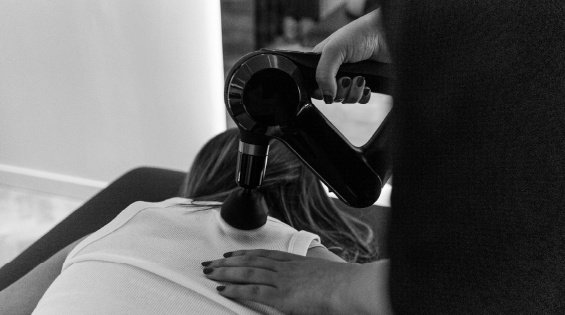
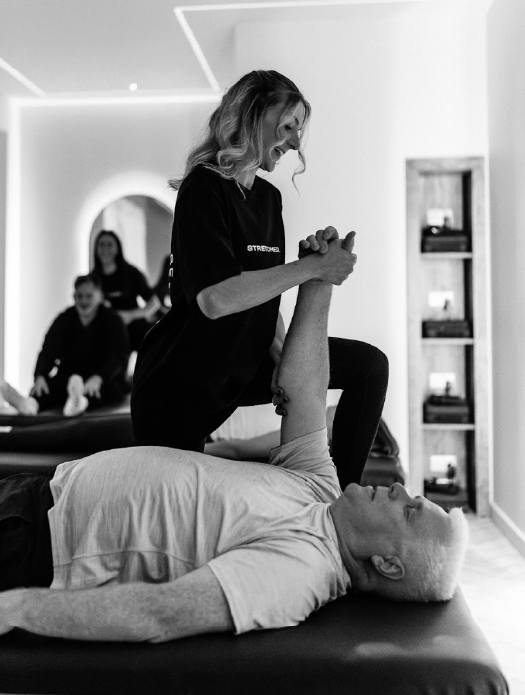
Assisted stretching is guided stretching carried out with the help of a trained professional. Instead of moving into a stretch on your own, the therapist gently moves your muscles and joints into position.
This allows the stretch to go deeper without strain and helps target areas that are hard to release alone, such as the neck and shoulders.
The neck and shoulders work constantly to support the head and upper body. Poor posture, such as leaning forward at a computer, can place extra stress on these muscles.
Repetitive movements and heavy lifting can also lead to stiffness or injury. Stress often plays a role too, as tension is commonly held in the neck and shoulder area.
When the muscles tighten, pain increases and movement becomes restricted.

Gentle stretching keeps joints moving and prevents rigidity. Encourages circulation and reduces inflammation.
Flexible muscles and tendons support movement more effectively, reducing strain on affected joints.
Movement releases natural endorphins and increases blood flow to clear inflammatory substances.
Restores balance and flexibility, helping the whole body move more naturally and comfortably.
As pain eases, staying active and independent becomes easier, improving daily wellbeing and confidence.
Trained therapists guide each movement safely, adapting to your unique needs and comfort level.
Working with a professional can help reduce stiffness and restore comfort. Assisted stretching increases flexibility in the muscles around the neck and shoulders, which improves movement.
It reduces muscle tension, eases pressure on the joints and supports better posture. Over time, regular sessions can also help prevent pain from returning by keeping the muscles balanced and relaxed.
A therapist will guide the head, neck and shoulders through controlled movements. Gentle stretches target the muscles along the neck, upper back and rotator cuff.
The stretches are carried out slowly and safely, always within your comfort range. This approach releases tightness, improves circulation and helps restore normal function.
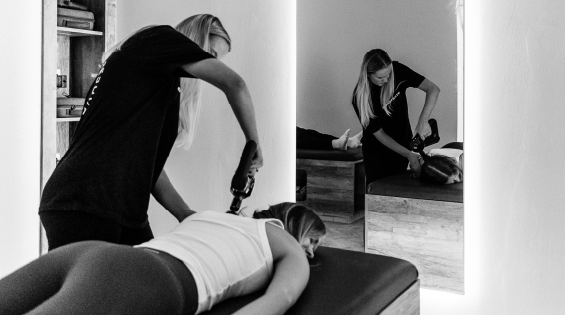
Assisted stretching can help people with different lifestyles and needs. Office workers often experience stiffness from sitting for long hours. Athletes may feel pain after repeated training or overuse.
Older adults may find that stretching supports mobility as muscles naturally tighten with age. Those recovering from minor injuries can also use assisted stretching to regain strength and comfort.
Book a consultation to see how assisted stretching can help you move more comfortably.
Stretching should never cause sharp or severe pain. A trained professional will know how far to guide each movement without placing the muscles or joints at risk.
If your pain is due to a recent or serious injury, it is best to check with a healthcare provider before beginning assisted stretching.

Neck & shoulder pain improves with regular movement. A single session can help ease stiffness, but lasting results come with consistency. Regular assisted stretching keeps the joints lubricated, the muscles flexible and the body moving comfortably.
Even gentle activity between sessions helps. Walking, swimming or light stretching at home can maintain progress and keep the neck & shoulder from stiffening up again. The key is to keep moving little and often rather than pushing too hard at once.
Over time, the body adapts. Muscles become looser, joints move more easily and daily tasks feel less demanding. The consistency builds strength and confidence in movement.
Neck and shoulder pain can make daily activities difficult and affect overall wellbeing.
Assisted stretching offers a safe and practical way to ease tension, improve posture and restore movement.
With professional guidance, it can be an effective step towards lasting relief.
Gentle movement to reduce stiffness and improve comfort.
• Eases joint pain through safe, guided stretches
• Improves flexibility and mobility
• Supports confidence in everyday movement
Restore comfort and strength through guided stretching.
• Relieves muscle tension and pressure on the spine
• Promotes better posture and flexibility
• Encourages natural, pain-free movement
Gradual, guided movement to restore shoulder mobility.
• Reduces pain and stiffness
• Improves range of motion safely
• Helps prevent the shoulder from tightening again
Release tension and restore flexibility in the legs.
• Loosens tight muscles safely
• Reduces strain on the hips and lower back
• Improves balance and movement
Gentle support to reduce hip pain and stiffness.
• Increases hip mobility and comfort
• Reduces pressure on the lower back
• Restores balance and strength in movement
Restore freedom of movement and joint comfort.
• Reduces stiffness and swelling
• Eases muscle tension around the joints
• Helps maintain flexibility and independence
Gentle stretches to support healthy, flexible knees.
• Reduces pressure and stiffness
• Strengthens supporting muscles
• Improves movement and stability
Relief from heel and foot pain through gentle stretching.
• Reduces tension in the calves and feet
• Supports recovery and flexibility
• Promotes pain-free walking and movement
Improve alignment and reduce pain with better posture.
• Loosens tight chest and shoulder muscles
• Strengthens the back for natural alignment
• Reduces strain from long hours of sitting
Ease nerve pressure and relieve lower back discomfort.
• Reduces tightness around the spine and hips
• Promotes smooth, pain-free movement
• Helps prevent future flare-ups
Restore shoulder comfort and movement safely.
• Relieves muscle tension and joint stiffness
• Improves flexibility and posture
• Helps restore confidence in movement
Support faster recovery and better performance.
• Reduces soreness after training
• Improves flexibility and balance
• Helps prevent injury and fatigue
STRETCHED GLASGOW
140-142 Woodlands Road
Glasgow
G3 6LF
Phone: 0141 378 9472
Email: Send a message
Location: Google Maps
Mon – Fri 10am to 8pm
Sat & Sun 10am to 6pm
STRETCHED EDINBURGH
107 Hanover Street
Edinburgh
EH2 1DJ
Phone: 0131 563 4430
Email: Send a message
Location: Google Maps
Monday – 10am to 8pm
Wednesday – Friday 10am to 8pm
Saturday 10am to 6pm
Sunday 10am to 5pm
(Closed On Tuesday)
STRETCHED MANCHESTER
81 Fountain Street
Manchester
M2 2EE
Phone: 0161 376 8198
Email: Send a message
Location: Google Maps
Monday – 10am to 8pm
Wednesday – Friday 10am to 8pm
Saturday 10am to 6pm
Sunday 10am to 5pm
(Closed On Tuesday)