Knee Pain Treatment Manchester
Gentle assisted stretching to reduce lower-body tightness, support knee mobility and help movement feel more comfortable.
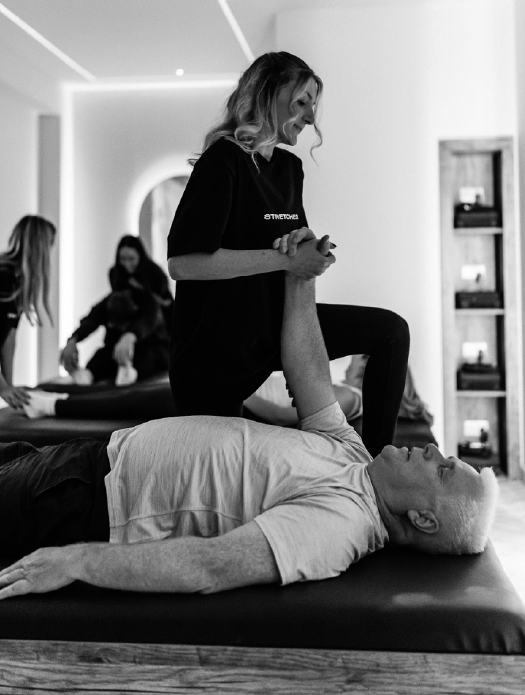
Gentle assisted stretching to reduce lower-body tightness, support knee mobility and help movement feel more comfortable.
Knee pain can quickly affect everyday life. Walking, climbing stairs, getting up from a chair, exercising or standing for long periods can all feel more difficult when the knee is stiff or uncomfortable. The knee does not work in isolation, and tightness through the hips, thighs, hamstrings and calves can influence how the whole leg moves. Assisted stretching provides a controlled and supportive way to work on these surrounding muscle groups and improve lower-body mobility.
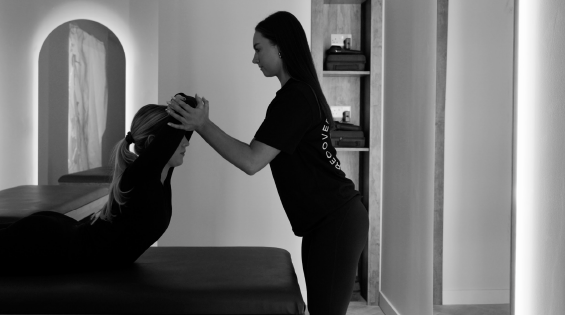
Assisted stretching is a guided form of movement carried out with the help of a trained professional. Your therapist supports your body and moves you through slow, controlled stretches while you stay relaxed. Because the therapist manages the position and pressure, each stretch can be adjusted to suit your available range.
For knee discomfort, sessions often focus on more than the knee itself. The quadriceps, hamstrings, calves, glutes and hips all influence lower-body movement, so improving flexibility in these areas can support more comfortable movement around the knee.
Knee pain can have many causes, including overuse, muscular tightness, previous injury, arthritis and changes in how the joint is loaded during everyday movement or exercise.
The knee relies on the muscles above and below it for support and control. Tight quadriceps, hamstrings or calves can make bending and straightening the leg feel more restricted, while reduced hip mobility can alter how the whole lower body moves.
When one knee feels uncomfortable, people often compensate without realising it. You may shift more weight onto the opposite leg, shorten your stride or avoid bending the knee fully. These changes can create additional tightness through the hips, thighs and calves.

Stretching the quadriceps, hamstrings and calves can help reduce muscular tension around the knee.
Better movement through the hips can support more balanced lower-body mechanics when walking and exercising.
Looser surrounding muscles can make bending, stepping and everyday movement feel less restricted.
Working on both legs can help reduce compensations that develop when one knee feels uncomfortable.
Controlled stretching can help you feel more comfortable using the knee within your available range.
Your therapist adapts every movement around your knee comfort, lower-body mobility and individual goals.
The knee depends heavily on the muscles around it. Tight quadriceps can increase the feeling of restriction at the front of the thigh, while tight hamstrings and calves can affect how comfortably the knee straightens and bends.
The hips are equally important. Reduced hip mobility can change the way the thigh moves during walking, squatting and climbing stairs, which can increase the amount of compensation taking place further down the leg.
Assisted stretching allows these connected areas to be worked on as part of one session. Rather than focusing only on the knee, your therapist can address the full chain of movement through the hips, thighs, calves and ankles.
Because each stretch is guided, the range can be kept within a comfortable level. This can be particularly helpful if you have become cautious about bending the knee or are used to protecting one side.
Over time, improved lower-body flexibility can help movement feel smoother and support confidence with activities such as walking, training, climbing stairs or returning to exercise.
During an assisted stretching session, your therapist selects movements according to where you feel tightness and how comfortably your lower body is moving. Sessions may include the quadriceps, hamstrings, calves, glutes and hips.
Each position is introduced slowly. The therapist supports the leg throughout and controls how far the knee bends or straightens so the stretch can be adjusted immediately if needed.
For example, quadriceps stretches can work on tightness through the front of the thigh, hamstring and calf stretches can improve flexibility behind the leg, and hip-focused movements can support more balanced lower-body mechanics.
The goal is not to force the knee. It is to improve the flexibility of the surrounding muscles and support more comfortable, controlled movement.
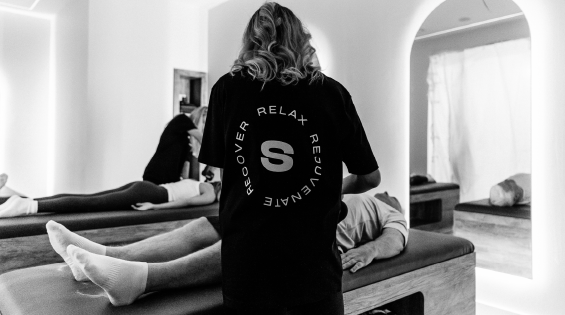
Assisted stretching may suit people experiencing muscular tightness around the knees, reduced lower-body flexibility or stiffness after periods of inactivity. It can also be useful for active people whose legs regularly feel tight after training.
Runners, cyclists, gym users and people who spend long periods sitting may all develop tightness through the quadriceps, hamstrings, hips or calves. Guided stretching can provide dedicated time to work on these areas.
If your knee is acutely swollen, unstable, has recently been injured, or you are recovering from surgery, seek appropriate medical or physiotherapy advice before beginning a stretching programme.
Book a consultation to see how assisted stretching could support more comfortable knee movement.
Knee stretching should always be gradual and controlled. You should not feel sharp pain, instability or a strong increase in symptoms during a stretch.
Your therapist can reduce the range, change the position or avoid a movement if it does not feel appropriate. The aim is to work on the surrounding muscles without forcing the knee beyond a comfortable range.
Always mention previous ligament injuries, meniscus problems, knee replacements, surgery, arthritis or any advice you have received from a healthcare professional.
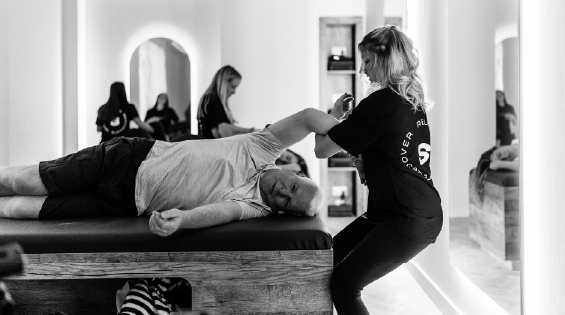
Muscular tightness around the knees often returns when the same movement patterns are repeated every day, particularly with lots of sitting, running, cycling or strength training. Regular mobility work gives the surrounding muscles repeated opportunities to stay flexible.
Activity between sessions can also help maintain progress. Walking, appropriate strength work and mobility exercises can support the flexibility and control needed for everyday lower-body movement.
With consistency, the hips, thighs and calves can become easier to move through their available ranges, helping the lower body feel less restricted during daily activities.
When a knee feels uncomfortable, it is easy to become more cautious and gradually move less. Assisted stretching provides a structured way to work on tight muscles around the knee without forcing the joint.
With guidance from a trained professional, each movement can be adapted around your current comfort and mobility. Regular sessions can support lower-body flexibility, help movement feel smoother and complement a wider approach to staying active.
Gentle movement to reduce stiffness and improve comfort.
• Eases joint pain through safe, guided stretches
• Improves flexibility and mobility
• Supports confidence in everyday movement
Restore comfort and strength through guided stretching.
• Relieves muscle tension and pressure on the spine
• Promotes better posture and flexibility
• Encourages natural, pain-free movement
Gradual, guided movement to restore shoulder mobility.
• Reduces pain and stiffness
• Improves range of motion safely
• Helps prevent the shoulder from tightening again
Release tension and restore flexibility in the legs.
• Loosens tight muscles safely
• Reduces strain on the hips and lower back
• Improves balance and movement
Gentle support to reduce hip pain and stiffness.
• Increases hip mobility and comfort
• Reduces pressure on the lower back
• Restores balance and strength in movement
Restore freedom of movement and joint comfort.
• Reduces stiffness and swelling
• Eases muscle tension around the joints
• Helps maintain flexibility and independence
Gentle stretches to support healthy, flexible knees.
• Reduces pressure and stiffness
• Strengthens supporting muscles
• Improves movement and stability
Relief from heel and foot pain through gentle stretching.
• Reduces tension in the calves and feet
• Supports recovery and flexibility
• Promotes pain-free walking and movement
Improve alignment and reduce pain with better posture.
• Loosens tight chest and shoulder muscles
• Strengthens the back for natural alignment
• Reduces strain from long hours of sitting
Ease nerve pressure and relieve lower back discomfort.
• Reduces tightness around the spine and hips
• Promotes smooth, pain-free movement
• Helps prevent future flare-ups
Restore shoulder comfort and movement safely.
• Relieves muscle tension and joint stiffness
• Improves flexibility and posture
• Helps restore confidence in movement
Support faster recovery and better performance.
• Reduces soreness after training
• Improves flexibility and balance
• Helps prevent injury and fatigue
STRETCHED GLASGOW
140-142 Woodlands Road
Glasgow
G3 6LF
Phone: 0141 378 9472
Email: Send a message
Location: Google Maps
Mon – Fri 10am to 8pm
Sat & Sun 10am to 6pm
STRETCHED EDINBURGH
107 Hanover Street
Edinburgh
EH2 1DJ
Phone: 0131 563 4430
Email: Send a message
Location: Google Maps
Monday – 10am to 8pm
Wednesday – Friday 10am to 8pm
Saturday 10am to 6pm
Sunday 10am to 5pm
(Closed On Tuesday)
STRETCHED MANCHESTER
81 Fountain Street
Manchester
M2 2EE
Phone: 0161 376 8198
Email: Send a message
Location: Google Maps
Monday – 10am to 8pm
Wednesday – Friday 10am to 8pm
Saturday 10am to 6pm
Sunday 10am to 5pm
(Closed On Tuesday)